Turn evaporation into water resilience for AI.

AI data centers need water for cooling. WaterPearls suppress evaporation on the surrounding farms — in the field and on irrigation reservoirs — keeping that water in the basin — metered, independently verified and allocated to your facility through a 25-year Water Replenishment Infrastructure Agreement (WRIA™).

01 Conserve Suppress evaporation
02 Quantify Metered, net of returns
03 Verify Independent MRV · VWBA 2.0
04 Allocate 25-yr WRIA™ to the operator
A metered water benefit — net, additional and same-basin — allocated to the data center under contract, never double-counted with the grower
77–98% less open-water basin evaporation 25–50% less irrigation water in the field Verified water benefit · VWBA 2.0 25-year WRIA™ · hardware-as-a-service

Evaporation-suppression range from RHST laboratory and field measurements. Irrigation and yield figures independently assessed for the Solar Impulse Efficient Solution label (2023). Context: 25–50% of irrigation water is lost to evaporation (UN FAO); reservoir evaporation is estimated at ~20% of global consumptive water use (Zhao et al., Nature Communications, 2022).

The constraint

In stressed basins, water now gates the build.

North America

The world's largest data-center market.

Nearly half of the world's data centers are in the United States, and hyperscalers have made public water-replenishment commitments for 2030. Those pledges need what permitting needs: verified, in-basin volume.

Worldwide

Approvals now hinge on water.

From community approvals in North America to environmental permits in Europe, regulators and neighbours now ask the water question before the build.

The gap

Offsets that don't hold up.

Traditional water offsets are expensive, slow to deploy, or hard to verify. A metered, in-basin water benefit is what permitting and disclosure actually need.

The scale

AI's water demand, in numbers.

1.08T
Litres a year — North American data centers
~45%
Of the world's data centers are in the US
2030
Hyperscalers' public water-replenishment commitments
25–50%
Less irrigation water drawn in the field

North American data centers use water on the order of 1.08 trillion litres a year (2025), projected to reach ~1.69 trillion by 2030 — Mordor Intelligence.

The mechanism

From conserved water to a financed Water Replenishment Infrastructure Agreement.

WaterPearls suppress evaporation in the field and on open water — turning losses into recoverable water yield.

1

Conserve

In the field, on perennial-crop irrigation — and on reservoirs — WaterPearls suppress evaporation: conserved water stays in the basin instead of being lost to the air.

2

Quantify

The conserved water is metered net of return flows, using WRI's VWBA 2.0 water-benefit accounting.

3

Verify

Third-party verification under WRI's VWBA 2.0 methodology — with SCS Global Services as designated verifier — aligned with the basin's water-management plan.

4

Allocate

The verified benefit is allocated to your facility under a 25-year take-or-pay contract. Participating farmers pay nothing.

The product

A physical product, not a promise.

WaterPearls are organic, super-hydrophobic beads the size of a small grape. They float on open water and suppress evaporation from the surface — a one-time, mechanical deployment with a 50-year service life.

Biomimicry Super-hydrophobic 50-year lifespan
WaterPearls — organic, super-hydrophobic beads resting on dark soil
The model

A Water Replenishment Infrastructure Agreement — not a product sale.

Like a solar farm, a WRIA™ is built once and delivers for decades: a verified water benefit, every year for 25 years — sold hardware-as-a-service on a take-or-pay contract, funded by the data center and infrastructure capital, never by the farmer.

01 · Hardware

A 50-year passive asset.

Deployed once — a single capital event creating a durable, no-moving-parts evaporation barrier.

02 · Deployment

Engineered to the watershed basin.

Installation, integration and optimization, designed around the irrigation systems already in place.

03 · MRV

Metered, verified, disclosable.

Independent MRV verifies the metered savings — disclosure-ready under IFRS S2 and EU CSRD where it applies, and aligned with WBCSD avoided-emissions guidance.

04 · Financialization

Built to underwrite like infrastructure.

The verified benefit underpins a 25-year indexed cash flow — what institutional capital underwrites once an investment-grade offtaker is contracted.

The water benefit is net, additional and same-basin — never double-counted with the grower.

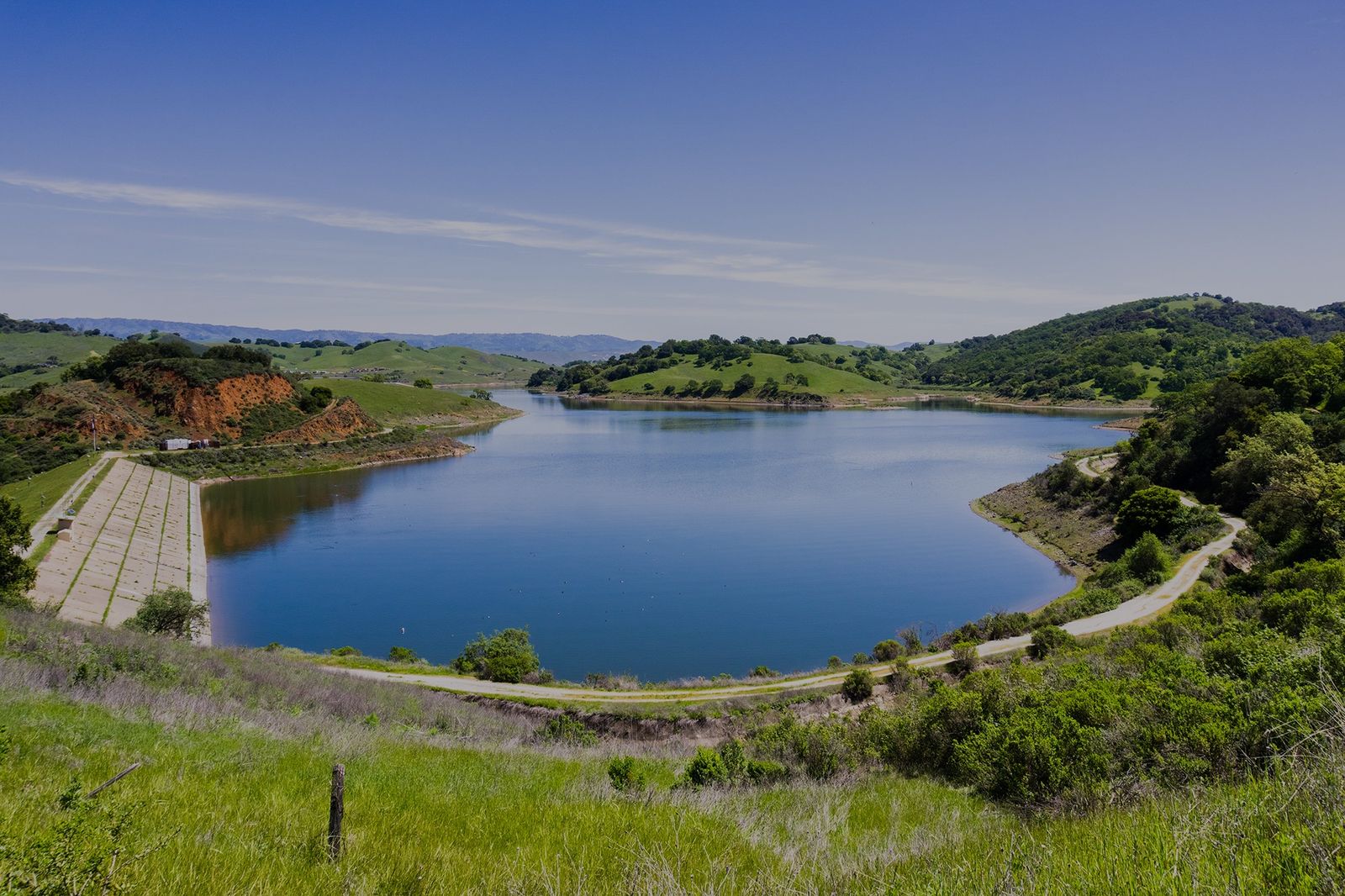
A reservoir held in green watershed hills — the open water where evaporation is suppressed
The basin

The water your data center draws from.

Farms draw roughly 70% of the world's fresh water — and a large share of it is lost to evaporation, in the field and on open water. Suppress that loss and the water stays in the catchment — in the basins your facilities depend on.

Why operators choose it

One contract, five things solved.

01 · Proactive water stewardship

Clear your water permit.

Put verified, metered water stewardship on the table — for siting and community approvals in North America, and permitting in stressed basins worldwide.

02 · Enhanced ESG performance

Count it toward 2030 commitments.

A verified, same-basin water benefit that counts toward public water-replenishment commitments — and feeds IFRS S2 and EU CSRD disclosure.

03 · Community alignment

A good neighbour, measurably.

Measurable local water benefits delivered with the basin's water agencies — building the community trust new builds depend on.

04 · Risk management

Less exposure to drought rules.

Reduced exposure to drought restrictions and water-scarcity risk — the exposure specialty insurers assess and underwrite.

05 · Long-term supply resilience

Stronger watersheds, for 25 years.

Stronger watershed sustainability in the basins your facilities depend on — for the life of the contract.

Investment opportunity

The infrastructure layer for AI's water problem.

North America is the largest data-center market, and its hyperscalers are publicly committed to replenishing water by 2030. A WRIA™ delivers a verified, same-basin water benefit that maps directly to those 2030 replenishment commitments.

Why now

The tailwinds are here.

  • North America — the largest data-center market — and hyperscalers' public 2030 water-replenishment commitments
  • AI buildout accelerating in water-stressed basins worldwide
  • Tightening water regulation and disclosure, from drought-prone US states to the EU

Credentials

Verifiable, today.

An NCPD Innovative Technology Excellence Prize 2025 (Saudi Arabia), a Solar Impulse Efficient Solution label (2020 and 2023), a U.S. patent granted in 2018, an ISO 14046-based Water Impact Report by Oxia Initiative, field trials in five countries since 2016 with academic collaborations including UC Davis and NAIT — and selection in VivaTech's 2026 Top 400 Tech for Change.

The asset

Built to underwrite like infrastructure.

A 25-year contracted water benefit, backed by a verifiable water resource — the structure institutional capital underwrites once an investment-grade offtaker is contracted.

Early-stage discussions underway; pilot and quantification partners being engaged. RHST licenses its technology to strategic operating partners — Partners & licensing →

Regulatory context

Water is becoming the permit.

In the United States, investors and communities increasingly press operators on water. Europe already gates new data centers on water permitting and disclosure — Île-de-France, home to more than half of France's data-center capacity, is the sharpest example — and Québec's LQE / REAFIE regime follows the same logic. Wherever water gates the build, a WRIA™ gives the operator a verified, same-basin water benefit to put on the table.

Next step

Let's talk about your basin.

For data center operators, water agencies and ESG investors — a 30-minute conversation is enough to see how the WRIA™ model applies, and how you'd benefit.